1.Research Themes
1.1. Locomotion Control of Quadrupeds
Structured Robot Learning for Safe and Reliable Robots in the Wild
This research direction focuses on combining model-based control with structured machine learning methods to achieve robust and reliable locomotion in challenging real-world environments. Topics include reinforcement learning with safety constraints, disturbance rejection, terrain-adaptive locomotion, state estimation, and sim-to-real transfer for quadrupedal robots operating outside laboratory conditions.
1.2 Wheeled-Legged Bipedal Robots
Whole-Body Control, Learning-Based Control, and Vision-Aware Autonomy
This topic investigates the integration of whole-body control, perception, and learning-based autonomy for dynamically stable wheeled-legged bipeds. Research problems include motion planning, contact-aware control, vision-guided navigation, multimodal locomotion, and machine learning methods for agile and energy-efficient mobility in unstructured environments.
1.3. Prosthetics and Orthotics
Research in this area focuses on intelligent assistive devices that improve mobility and quality of life. Topics include biomechanical modeling, adaptive control of wearable devices, intent estimation, human-in-the-loop optimization, compliant actuation, and personalized assistive technologies for rehabilitation and augmentation.
1.4. Medical Robotics
This research area addresses robotic systems for healthcare, rehabilitation, and surgical assistance. Potential topics include robotic rehabilitation systems, wearable robotics, sensor-driven assistive technologies, patient-specific robotic interaction, and AI-assisted medical robotic platforms integrating perception, control, and human-centered design.
1.5. Physical Human–Robot
Interaction for Industrial Contact-Rich Manipulation
This topic focuses on safe and intelligent physical interaction between humans and robots in industrial environments involving contact-rich tasks. Research directions include impedance and force control, compliant manipulation, shared autonomy, learning from demonstration, contact-aware planning, and collaborative robotic systems capable of operating safely alongside human workers.
2. Candidate Expectations
We are seeking ambitious and motivated PhD candidates with the following profile:
2.1. Educational Background
Graduates of Computer Science, Electrical/Electronics Engineering, Mechanical/Mechatronics Engineering, Computer Science, or related fields. Prior undergraduate or graduate-level research experience in AI and/or robotics is strongly desired.
2.2. Technical Skills
2.3. Personal Qualities
We are looking for curiosity-driven individuals who are passionate about intelligent robotics and motivated to contribute to shaping the future of robotics and AI through both theoretical and experimental research.
3. Benefits for Successful Candidates
3.1. Competitive Financial Support
Financial support is provided through the Özyeğin University Graduate School.
3.2. Access to Advanced Robotic Platforms
Students will have access to state-of-the-art robotic systems developed both within our laboratory and through our robotics spinoff initiatives, including:
3.3. Industrial and Academic Infrastructure
Our center provides access to advanced laboratories and in-house developed robotic systems, as well as multiple industrial manipulators including:
3.4. International and Domestic Collaborations
Students will have opportunities to collaborate with leading domestic and international research institutions, including:
3.5. Academic Career Development
Students are expected to actively contribute to high-impact scientific publications and leading robotics conferences and journals, including:
4. About Our Center
Our center at Özyeğin University specializes in Physical AI and robotics, with the vision of merging adaptability and intuition with robot learning. We focus on developing algorithms that address key limitations of current AI systems, including excessive data requirements, long offline training procedures, and limited real-time adaptability.
By integrating reinforcement learning, optimal and robust control theory, biomechanical modeling, and human-in-the-loop learning strategies, our group aims to advance intelligent robotics in:
5. Application Procedure
Interested candidates should send the following documents to Assoc. Prof. Dr. Barkan Uğurlu:
Applications will be reviewed on a rolling basis until all positions are filled.
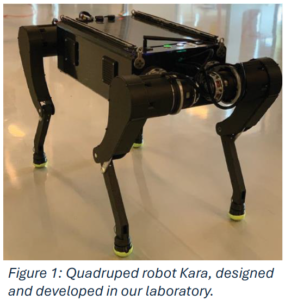
We invite applications for Post-Doctoral Researcher positions in advanced robotics and physical AI. We are seeking highly motivated researchers who are interested in contributing to cutting-edge research at the intersection of robotics, machine learning, control, biomechanics, and human–robot interaction.
We solicit post-doctoral researchers in one or more of the following areas:
Successful candidates will join an interdisciplinary robotics environment with strong emphasis on both theoretical research and experimental validation using real robotic systems.
1. Position Overview
The post-doctoral researcher is expected to play a leading role in ongoing and newly initiated research projects. Responsibilities include conducting independent research, contributing to high-impact publications, mentoring junior researchers, and supporting the development of collaborative research initiatives.
An ideal post-doctoral researcher should be capable of:
The position is designed not only as a research role, but also as a professional development opportunity. Our goal is to help post-doctoral researchers build strong academic and industrial research careers, preparing them for:
2. Candidate Profile
We are seeking candidates with strong theoretical and hands-on expertise in robotics and intelligent systems.
Applicants should possess:
Depending on the research area, additional expertise in one or more of the following is highly desirable:
3. Laboratory and Research Infrastructure
Our center provides access to advanced robotics laboratories and state-of-the-art robotic platforms developed both in-house and through our robotics spinoff initiatives.
Available systems include:
The laboratory infrastructure supports:
4. Collaborations and Academic Environment
Researchers in our laboratory actively collaborate with leading domestic and international institutions, including:
The laboratory strongly encourages participation in:
5. About Our Laboratory
Our center at Özyeğin University specializes in Physical AI and robotics, with the vision of merging adaptability and intuition with robot learning. We focus on developing algorithms that address key limitations of current AI systems, including excessive data requirements, long offline training procedures, and limited real-time adaptability.
By integrating reinforcement learning, optimal and robust control theory, biomechanical modeling, and human-in-the-loop learning strategies, our group aims to advance intelligent robotics in:
Our research aims to overcome key limitations of current AI systems, including excessive data requirements, limited adaptability, and poor real-time interaction capabilities.
5. Application Procedure
Interested candidates should send the following documents to Assoc. Prof. Dr. R. Barkan Uğurlu:
Applications will be reviewed on a rolling basis until all positions are filled.
© 2026 Özyeğin Üniversitesi